ZERO-G Support Exciting New YAMAHA Technology by Producing Custom Vocal Libraries for their Incredible New VOCALOID Singing Synthesis Software.
[STOP PRESS!! Hot news on first three Vocaloid products just released - read the following then click HERE]
Zero-G Limited (UK), a world leader in digital audio samples and soundware development, is working with YAMAHA Corporation, the world's largest manufacturer of musical instruments and a leader in digital audio, to develop content in the form of vocal libraries for VOCALOID, the incredible new Singing Synthesis Technology developed by Yamaha.
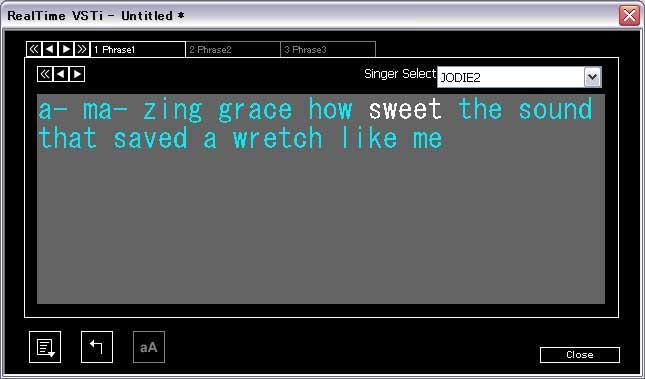
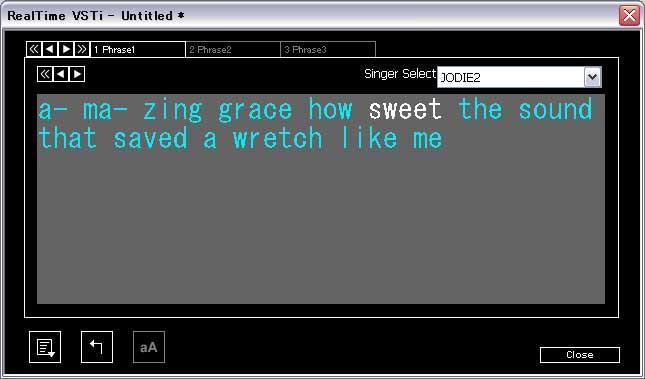
VOCALOID allows song writers to generate superb authentic-sounding singing on their PCs by simply inputting the words and notes of their compositions. The software synthesizes the sound from "vocal libraries" of recordings of actual singers, such as those being developed by Zero-G, and retains the vocal qualities of the original singing voices to reproduce real-sounding vocals. VOCALOID also features simple commands enabling users to add expressive effects, and as it runs on Windows-based PCs, amateur enthusiasts as well as professionals can now enjoy creating music with great-sounding vocals.
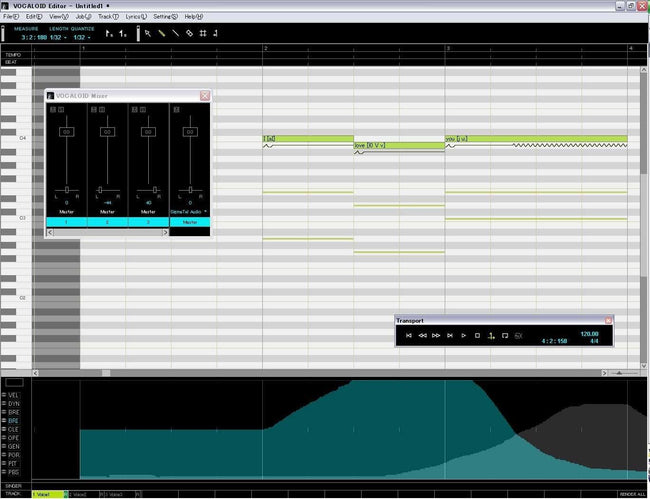
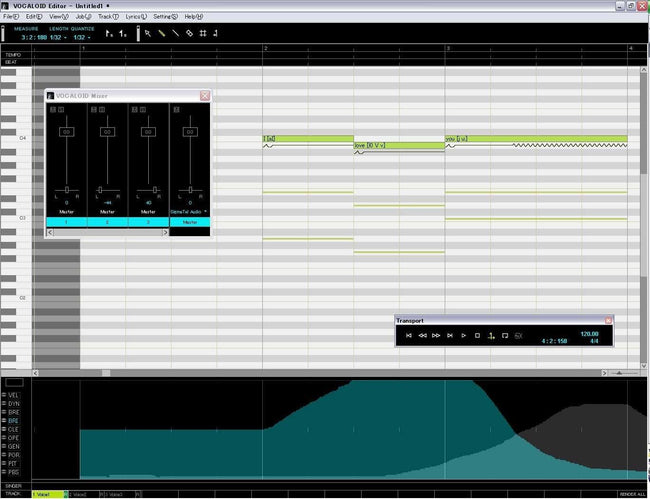
CLICK ON THE LINK "VOCALOID DEMO VOCAL (.MP3)" ABOVE, TO HEAR AN EXAMPLE OF VOCALOID "SINGING" (ACTUALLY SYNTHESIZING!!) A VOCAL LINE IN JAPANESE. In this example, notes and words had been input into the editor window in Japanese, with Vocaloid accessing an experimental Japanese vocal font. Zero-G is currently developing the first high quality vocal fonts in English.
"We are extremely excited to be developing content for such a revolutionary technology that we firmly believe will quite simply prove to be a landmark in the history of music creation. With Yamaha's VOCALOID, now anyone can create professional-sounding vocals with a high degree of realism," says Zero-G founder and Managing Director Ed Stratton, "and the precise control of melody, words and expression represents a huge leap in potential for everyone, from producers of classical music right through to those working at the cutting edge of dance music and more experimental genres. The results obtainable with VOCALOID really have to be heard to be believed."
Zero-G demonstrated VOCALOID's amazing abilities at the Musikmesse from March 5 - 9, 2003 in Frankfurt am Main, Germany. Yamaha unveiled and exhibited the new technology for the first time at the Musikmesse, and will also show it at the 114th Audio Engineering Society (AES) Convention scheduled for March 22 - 25, 2003 in Amsterdam, the Netherlands.
VOCALOID vocal-synthesizing software overcomes the limitations that technology and resources have always placed on composers' ability to freely create recordings incorporating singing. With the enormous popularity of sound samplers it's not surprising that many producers have tried creating music with vocals using samples of human voice snippets, but that method's range of lyrical and vocal expression is very limited and generally produces very poor results.
Yamaha's newly-developed vocal-synthesizing VOCALOID software, together with vocal libraries (or vocal 'fonts') by Zero-G and others, now changes all this.
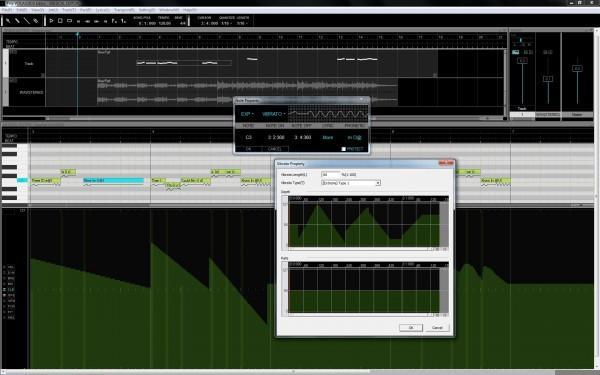
By simply inputting melody and words on their PCs, and adding expressive effects such as vibrato and pitch bends via a simple drag-and-drop process, users can produce the vocal parts for their pieces with no further work. The results are incredibly realistic because VOCALOID synthesizes the sound from "vocal libraries" of recordings of real people singing and the synthesized vocal line retains the vocal qualities of the original singers' voices.
Zero-G is developing of a range of vocal libraries in order to make the production of vocals in a wide range of voice qualities possible using VOCALOID. Currently, VOCALOID can generate singing in Japanese and English. Zero-G's first two vocal libraries will be released at the NAMM show in January 2004, followed by at least one more at the Frankfurt Music Messe in March 2004.
VOCALOID uses Frequency-Domain Singing Articulation Splicing and Shaping, a vocal (singing-voice) synthesizing system developed by Yamaha.
With this system, the "singing articulations" (collections of voice snippets, such as of phrases, and snippets of vocal expression variations like vibrato) needed to reproduce vocals are collected from custom-produced recordings of accomplished singers and put into a database after conversion into frequency domains.
To synthesize vocal parts, the system retrieves data consisting of voice snippets, applies pitch conversion, and splices and shapes them to form the words of a song as input by the user. As this processing is done at the frequency-domain level, pitch can be easily changed according to the specified melody, and the voice snippets can be spliced in a way that reproduces smooth-flowing words.
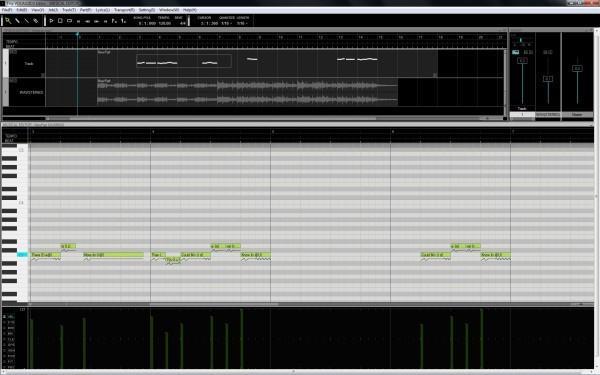
VOCALOID itself consists of a score editor, which does the scale, song-word, and expression processing; the Vocal Sound Generator, the engine that synthesizes the vocals; and libraries produced by Zero-G and other leading soundware developers (each library being comprised of a pronunciation database and a timbre database), with one library for each vocal. New vocal libraries are created by recording real voices pronouncing basic vocabulary and reproducing variation effects (such as vibrato) according to templates.
More info and the latest news on Vocaloid can be found by clicking on the links in "Related Info" box, above right.
Also, you can visit Yamaha's official Vocaloid website at www.vocaloid.com
The names of products or companies mentioned in this document are trademarks or registered trademarks of their respective owners.
Contact: Ed Stratton, Managing Director, Zero-G Limited (UK) Email: info@zero-g.co.uk
|